Gamers News | GamersNewz

Gamers Lates News and BLOG

No half-assed performance: how playing with a live crowd turns video games into performance art

No half-assed performance: how playing with a live crowd turns video games into performance art

This weekend, I spent more than eight hours in a theatre playing a video game about donkeys, reincarnation and organised labour with about 70 other people. Political, unpredictable and replete with ass puns, Asses.Masses is, on the one hand, a fairly rudimentary-looking video game made by Canadian artists Patrick Blenkarn and Milton Lim with a small team of collaborators. But the setting – in a theatre, surrounded by others, everybody shouting advice and opinions and working together on puzzles – transforms it into a piece of collective performance art.

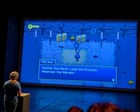
Here’s how it works: on a plinth in front of a giant projected screen is a controller. In the seats: the audience. Whoever wants to get up and take control can do so, and they become the avatar of the crowd. The game opens with a series of questions, mostly about donkeys, some in different languages, and quickly it becomes obvious that you have to work together to get them right. Someone in our crowd spoke Spanish; another knew the answer to an engineering question; I knew, somehow, that a female donkey is called a jennet.

This is what makes the game a collective experience. Usually, no more than one person has their hands on the controller but, nonetheless, everyone is participating as you guide a group of donkeys on a long, surprising and increasingly surreal quest to get their jobs back from the farm machines that have made them redundant.

It made me want to invite friends round my house and pass the controller around all day like we used to in our early 20s. My friend was reminded of a video game book club she used to run, where six people would play through a game such as What Remains of Edith Finch together (and laugh at it, in that specific instance). Asses.Masses is specifically designed around collective play, but I can think of plenty more shortish, thought-provoking games that could be staged like this, and that would inspire an interesting reaction from audiences. And if the number of people who engage with Twitch is any indication, I think a lot of people would come.

Stumbling out of the theatre and into the rainy Glasgow night, I felt a real sense of camaraderie with the small crowd I’d been playing with. Often when I finish a game, I’m on my own in the living room in the middle of the night, while my family sleeps, and I have nobody to turn to to discuss it with. This time, I had a whole group of people to debrief with, and it reminded me that it is always the addition of human players that animates games with soul.

Assess.Masses is on a

I have two spooky (but not too scary, because I’m a wuss) recommendations for Halloween week. Firstly:

  • The biggest news from the past week is that Microsoft is releasing Halo on PlayStation, a sentence that would have been unthinkable even a few years ago. Specifically: a remake of the original (and best, don’t @ me) Halo: Combat Evolved will be releasing on all platforms next year, with Xbox’s execs peddling the line that console exclusives are now simply outdated. As former Blizzard boss Mike Ybarra put it: “Go tell Nintendo that.”

  • A report from Business Insider outlines how EA’s management has been asking its employees to use its in-house AI “for almost everything”, from coding to conversations about promotions. Several employees expressed concerns that they are essentially being paid to train their replacements, and generating even more work for themselves in the meantime in correcting AI’s mistakes.

  • Following crossovers with everything from KPop Demon Hunters to Daft Punk, the next big Fortnite collaboration has been announced: The Simpsons, featuring a whole Springfield map as well as character skins. It launches on Saturday.

What to click

Question Block

Reader Emily asks this week’s question:

“I read your article about the game Baby Steps and it sounded very similar to Getting Over It With Bennett Foddy. It is so exasperating because it is so difficult and you often end up falling back to the beginning and having to start all over again – but at the same time it is compelling. Which are the most deliberately difficult but compelling games to play?”

You’ve made an astute connection here, Emily, because Bennett Foddy is one of the three main developers (and voice actors) behind Baby Steps, and a natural extension of his game-design philosophy of making players howl with self-pity. (Here’s an interesting talk he gave about suffering and games.) Foddy’s oeuvre is a masterclass in this, and he makes the interesting observation that, since the 1990s, games have focused on removing suffering, making things smoother for the player. In doing so, they’ve taken away something that made them so interesting.

I play a lot of games that make me suffer, for reasons Foddy has helped me understand: the bigger the pain, the bigger the gain (and the less likely you are to be bored – my personal hell). The most memorable have been the aforementioned Baby Steps, everything in the Dark Souls/FromSoft canon (though not Sekiro, which annoyed the hell out of me), Cuphead, Super Meat Boy, Returnal and, of course, Hollow Knight: Silksong, which I will definitely finish soon.

If you’ve got a question for Question Block – or anything else to say about the newsletter – hit reply or email us on pushingbuttons@theguardian.com.


Experience expert security system installation & low‑voltage services across North & South Carolina with 360 Technology Group — your local, customer‑focused partner for over three decades.

Author: 360 Technology Group

No half-assed performance: how playing with a live crowd turns video games into performance art

No half-assed performance: how playing with a live crowd turns video games into performance art

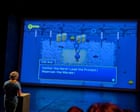
This weekend, I spent more than eight hours in a theatre playing a video game about donkeys, reincarnation and organised labour with about 70 other people. Political, unpredictable and replete with ass puns, Asses.Masses is, on the one hand, a fairly rudimentary-looking video game made by Canadian artists Patrick Blenkarn and Milton Lim with a small team of collaborators. But the setting – in a theatre, surrounded by others, everybody shouting advice and opinions and working together on puzzles – transforms it into a piece of collective performance art.

Here’s how it works: on a plinth in front of a giant projected screen is a controller. In the seats: the audience. Whoever wants to get up and take control can do so, and they become the avatar of the crowd. The game opens with a series of questions, mostly about donkeys, some in different languages, and quickly it becomes obvious that you have to work together to get them right. Someone in our crowd spoke Spanish; another knew the answer to an engineering question; I knew, somehow, that a female donkey is called a jennet.

This is what makes the game a collective experience. Usually, no more than one person has their hands on the controller but, nonetheless, everyone is participating as you guide a group of donkeys on a long, surprising and increasingly surreal quest to get their jobs back from the farm machines that have made them redundant.

It made me want to invite friends round my house and pass the controller around all day like we used to in our early 20s. My friend was reminded of a video game book club she used to run, where six people would play through a game such as What Remains of Edith Finch together (and laugh at it, in that specific instance). Asses.Masses is specifically designed around collective play, but I can think of plenty more shortish, thought-provoking games that could be staged like this, and that would inspire an interesting reaction from audiences. And if the number of people who engage with Twitch is any indication, I think a lot of people would come.

Stumbling out of the theatre and into the rainy Glasgow night, I felt a real sense of camaraderie with the small crowd I’d been playing with. Often when I finish a game, I’m on my own in the living room in the middle of the night, while my family sleeps, and I have nobody to turn to to discuss it with. This time, I had a whole group of people to debrief with, and it reminded me that it is always the addition of human players that animates games with soul.

Assess.Masses is on a

I have two spooky (but not too scary, because I’m a wuss) recommendations for Halloween week. Firstly:

  • The biggest news from the past week is that Microsoft is releasing Halo on PlayStation, a sentence that would have been unthinkable even a few years ago. Specifically: a remake of the original (and best, don’t @ me) Halo: Combat Evolved will be releasing on all platforms next year, with Xbox’s execs peddling the line that console exclusives are now simply outdated. As former Blizzard boss Mike Ybarra put it: “Go tell Nintendo that.”

  • A report from Business Insider outlines how EA’s management has been asking its employees to use its in-house AI “for almost everything”, from coding to conversations about promotions. Several employees expressed concerns that they are essentially being paid to train their replacements, and generating even more work for themselves in the meantime in correcting AI’s mistakes.

  • Following crossovers with everything from KPop Demon Hunters to Daft Punk, the next big Fortnite collaboration has been announced: The Simpsons, featuring a whole Springfield map as well as character skins. It launches on Saturday.

What to click

Question Block

Reader Emily asks this week’s question:

“I read your article about the game Baby Steps and it sounded very similar to Getting Over It With Bennett Foddy. It is so exasperating because it is so difficult and you often end up falling back to the beginning and having to start all over again – but at the same time it is compelling. Which are the most deliberately difficult but compelling games to play?”

You’ve made an astute connection here, Emily, because Bennett Foddy is one of the three main developers (and voice actors) behind Baby Steps, and a natural extension of his game-design philosophy of making players howl with self-pity. (Here’s an interesting talk he gave about suffering and games.) Foddy’s oeuvre is a masterclass in this, and he makes the interesting observation that, since the 1990s, games have focused on removing suffering, making things smoother for the player. In doing so, they’ve taken away something that made them so interesting.

I play a lot of games that make me suffer, for reasons Foddy has helped me understand: the bigger the pain, the bigger the gain (and the less likely you are to be bored – my personal hell). The most memorable have been the aforementioned Baby Steps, everything in the Dark Souls/FromSoft canon (though not Sekiro, which annoyed the hell out of me), Cuphead, Super Meat Boy, Returnal and, of course, Hollow Knight: Silksong, which I will definitely finish soon.

If you’ve got a question for Question Block – or anything else to say about the newsletter – hit reply or email us on pushingbuttons@theguardian.com.


Experience expert security system installation & low‑voltage services across North & South Carolina with 360 Technology Group — your local, customer‑focused partner for over three decades.

Author: 360 Technology Group