
I spent my first four hours in Baldur’s Gate 3 restarting character creation, agonising over whether my half-elf warlock should have slightly different cheekbones, only to discover ten minutes into the actual game that I’d picked a subclass I didn’t remotely understand. My second attempt went much better, largely because I stopped treating the character creator like a fashion show and started paying attention to the bits that actually matter in combat. If you’re about to start BG3 for the first time — or you bounced off it once already — this guide covers everything I wish someone had told me before I clicked “Venture Forth” for the third time.
Character Creation: What Actually Matters
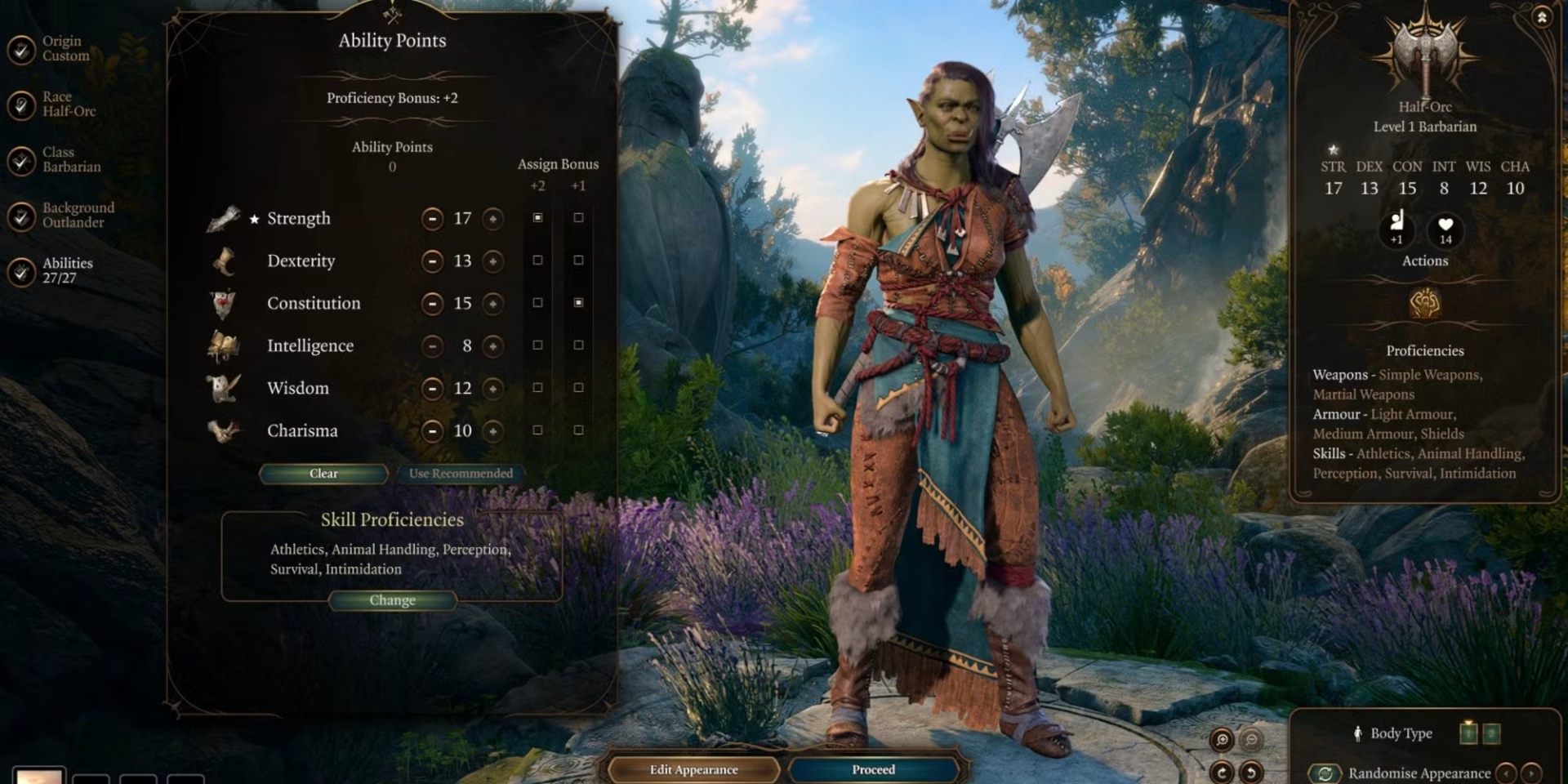
The character creator in BG3 is glorious, dangerously detailed, and roughly 80% cosmetic fluff that has zero bearing on how your game plays out. The things that genuinely matter are your class, your subclass, and your ability scores — everything else is flavour, and flavour is wonderful, but it won’t save you from a pack of gnolls at level three.
Class choice is the big one. If you’ve never touched Dungeons & Dragons before, start with a class that forgives mistakes: Fighter, Paladin, or Ranger are all solid picks that give you decent hit points, armour, and enough offensive options to feel useful without drowning you in spell slots and concentration mechanics. Sorcerer and Wizard are phenomenally powerful later on, but they’re squishy at low levels and punish poor positioning mercilessly, which is the last thing you want while you’re still learning how the camera works.
Ability scores matter more than you’d think, because BG3 is built on the D&D 5th Edition ruleset where almost every action — attacking, persuading, sneaking, surviving — is a dice roll modified by your stats. Focus on your class’s primary ability (Strength for Fighters, Charisma for Warlocks, Wisdom for Clerics) and Constitution, which determines your hit points. Don’t spread your points evenly across everything, that’s a trap that leaves you mediocre at all of it.
Race matters less than it used to, thanks to Larian’s flexible racial bonuses, but some racial abilities are genuinely handy. Half-Orcs get Relentless Endurance (survive a killing blow once per long rest), Shield Dwarves get extra hit points, and Githyanki get free proficiency in medium armour, which is absurdly useful for spellcasters who’d otherwise be running around in pyjamas.
Building Your First Party
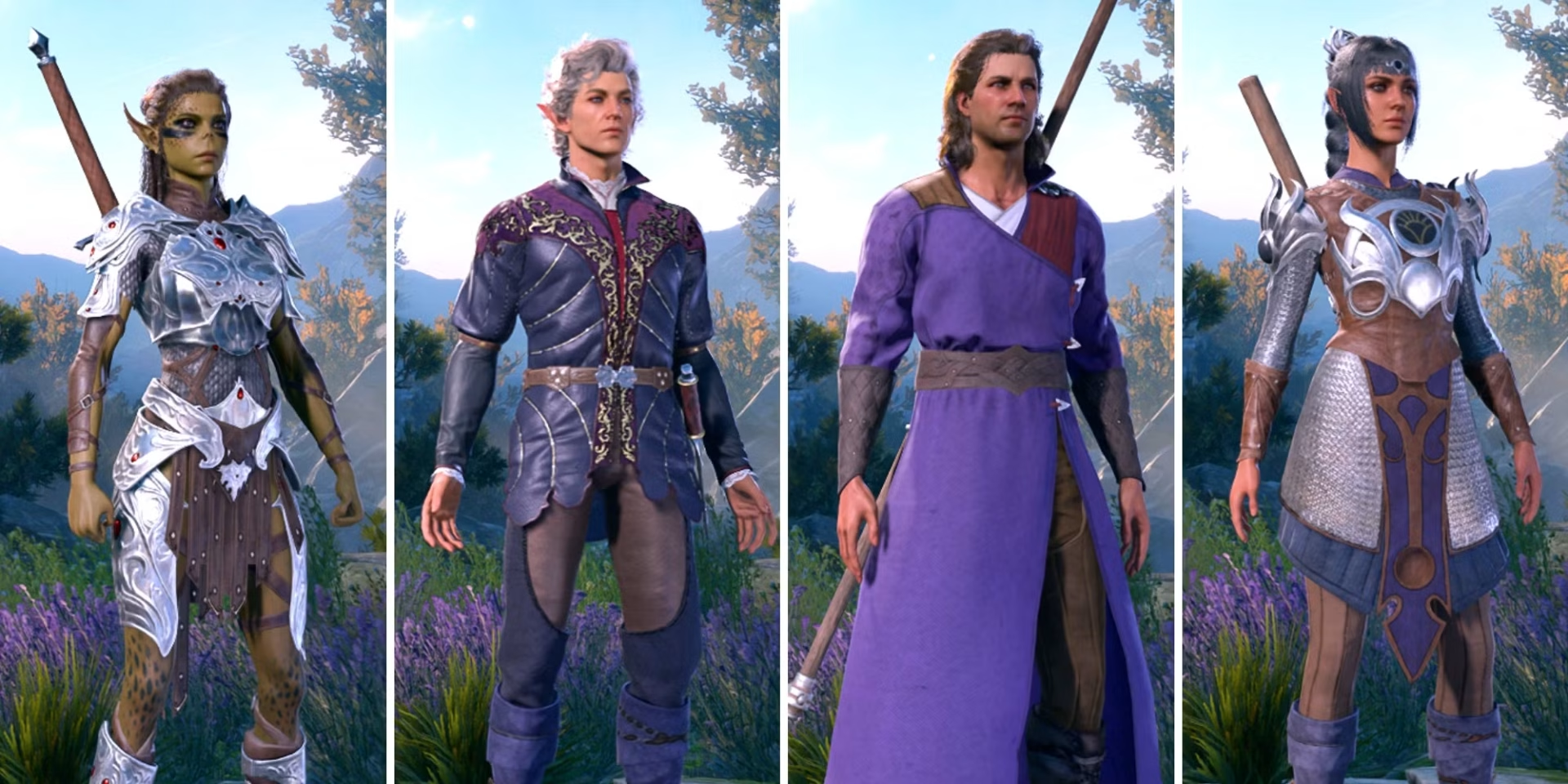
You can recruit up to five companions in Act 1, but you can only bring three of them with you at any time, which means party composition is one of the first real decisions the game asks you to make. The good news is that BG3 is generous enough that almost any combination can work on Balanced difficulty, the default setting, so don’t stress about optimising a perfect team on your first run.
That said, a few general principles will save you a lot of reloading. You want at least one character who can heal (Shadowheart is right there, she’s a Cleric, use her), at least one character who can deal consistent melee damage (Lae’zel the Fighter is excellent for this), and ideally someone with decent Charisma for dialogue checks, since BG3 is as much a talking game as a fighting one. Wyll and Astarion both cover useful niches — Wyll as a Warlock brings Eldritch Blast, one of the best ranged cantrips in the game, and Astarion as a Rogue can handle locks, traps, and devastating sneak attacks.
Don’t feel locked into your first party, either. Companions you leave at camp still earn experience, so swapping someone in for a specific quest or dungeon won’t leave them underlevelled. Experiment freely, and you’ll find the combination that suits your playstyle naturally.
Combat Basics: The D&D Stuff You Need to Know
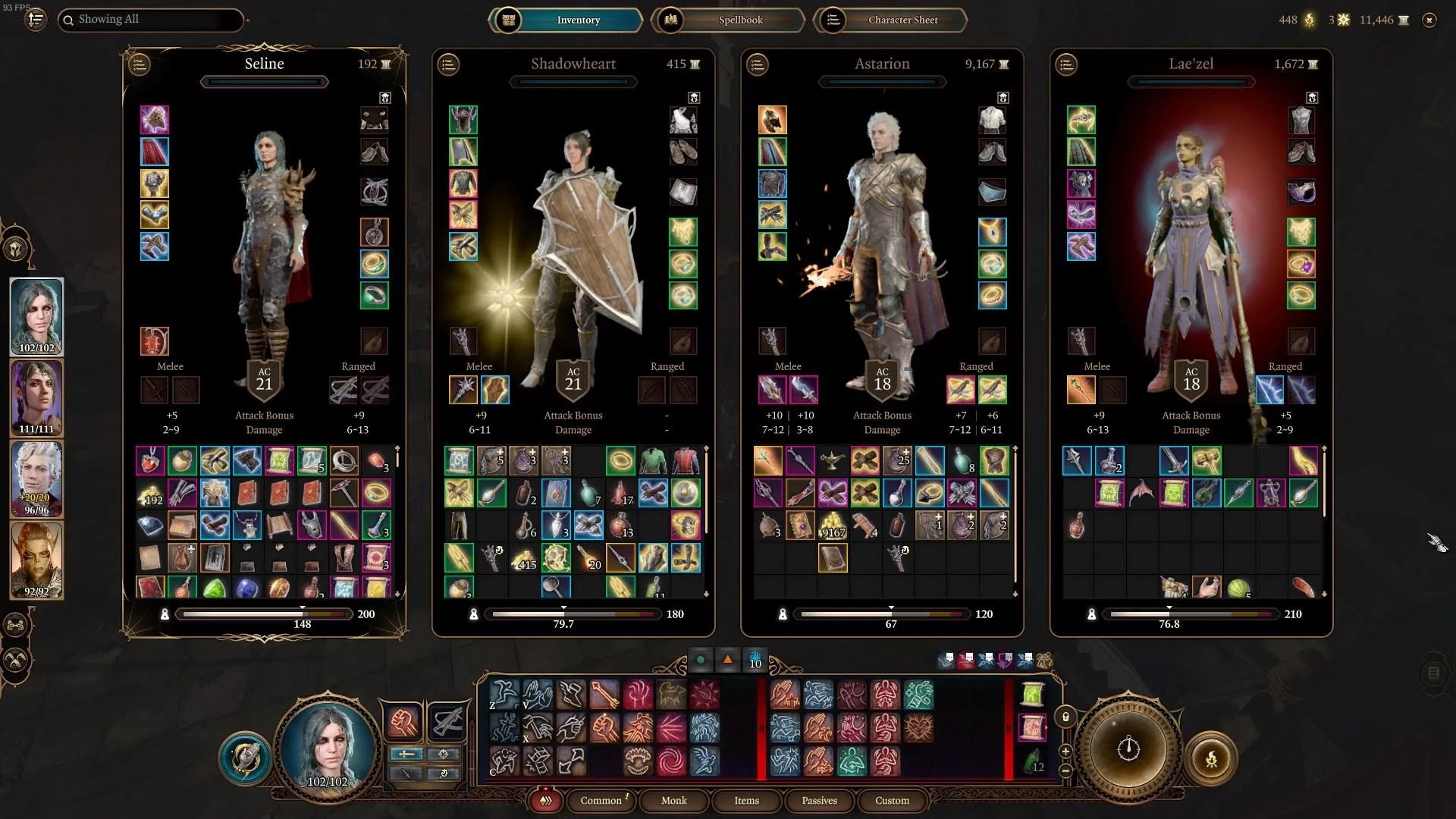
Combat in BG3 is turn-based, built on the 5th Edition D&D ruleset, and considerably deeper than it first appears. Every character gets one Action, one Bonus Action, and a set amount of Movement per turn — understanding how to use all three is the difference between scraping through fights and dominating them.
Actions are your main event: attacking, casting most spells, dashing, disengaging, or shoving. Bonus Actions are smaller moves — offhand attacks, certain class abilities, healing potions (yes, drinking a potion is a bonus action in BG3, which is a gift from Larian). Movement lets you reposition, and positioning matters enormously because height advantage gives you a +2 bonus to attack rolls while disadvantage from low ground imposes a -2 penalty. Always look for high ground before a fight starts, climb that rock, stand on that table, it’s free real estate.
The other concept worth understanding early is concentration. Many of the best spells in the game — Bless, Hold Person, Haste — require concentration, which means you can only maintain one at a time, and taking damage forces a saving throw to keep it active. If your spellcaster is standing in the open getting pelted with arrows, they’re going to lose concentration constantly, which makes those lovely buff spells essentially worthless. Keep your casters protected, or at the very least, cast Bless before the fight and then hide behind a pillar.
If you enjoy this kind of strategic depth in RPGs, you might appreciate our guide to Chained Echoes, which has a similarly rewarding combat system, albeit in a very different wrapper.
Common Mistakes in Act 1
Act 1 is enormous — easily 40 to 60 hours if you explore properly — and there are a handful of mistakes that nearly everyone makes on their first playthrough, most of which I made twice just to be thorough.
Ignoring the tutorial. The Nautiloid ship at the very start teaches you critical mechanics — how to use the environment, how to shove enemies off ledges, how bonus actions work — and if you rush through it because you want to reach the open world, you’ll spend the next ten hours wondering why combat feels so clunky. Take your time on the ship, talk to everyone, and loot everything.
Fighting everything at level one. The world doesn’t scale to your level. Some encounters near the crash site, particularly the gnoll cave and the Ethel hag fight, are designed for level four or five, and walking into them at level two is a recipe for frustration. If a fight feels impossible, it probably is — come back later, there’s no shame in it, the game expects you to.
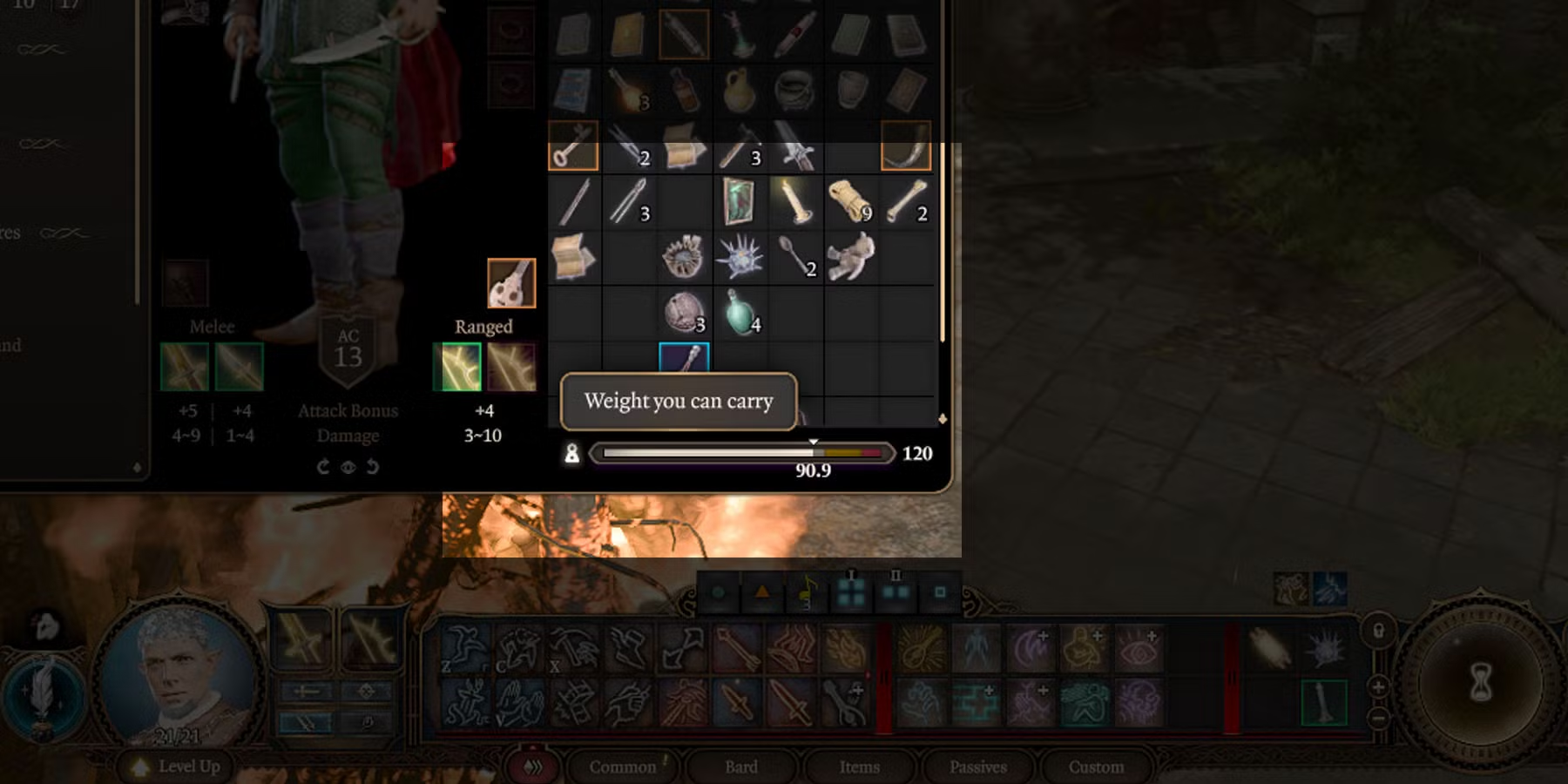
Hoarding supplies. Scrolls, potions, throwables, spell slots — BG3 hands you an absurd amount of consumables, and the instinct to save them for a “harder fight later” means most players finish Act 1 with an inventory full of unused bombs and healing potions. Use them, especially on Balanced difficulty, you’ll find more.
Neglecting camp conversations. After major story events, your companions will have new dialogue at camp, and these conversations aren’t just flavour — they unlock companion quests, approval changes, and romance options. Long rest regularly, check in with your party, and talk to everyone before heading off to the next dungeon.

When to Save (and Why)
BG3 has quicksave (F5 on PC) and autosave, but neither is aggressive enough to rely on exclusively. The game’s branching narrative means a single dialogue choice or a failed dice roll can lock you out of entire questlines, and while that’s part of the charm — consequences are what make this game feel alive — it’s also the kind of thing you might want to undo on a first playthrough when you accidentally tell a key NPC to sod off and they leave permanently.
Save before every major conversation, before every fight you haven’t attempted before, and before you enter any new area for the first time. Create named manual saves at the start of each session so you have clean rollback points if something goes sideways three hours later. I know it sounds excessive, but you will thank yourself when you realise you’ve just sold a plot-critical item to a vendor who’s now vanished, and your last autosave was forty minutes ago… ask me how I know.

General Tips That Nobody Tells You
A few scattered bits of wisdom that took me far too long to discover on my own, offered here so you can look significantly more competent than I did.
You can split your party. Hold the character portrait and drag them out of the group to move them independently. This is essential for setting up ambushes — position your rogue behind the enemy, your fighter on the high ground, and your mage at range, then start the fight with the character who has the worst initiative so everyone else gets to act first.
Talk to animals. The Speak With Animals spell (or the potion, which is cheap and everywhere) unlocks entire quest threads and some of the funniest writing in the game. A certain squirrel near the Druid Grove has genuinely important information, and you’ll never know without it.
Read your spell tooltips. BG3 does a surprisingly good job of explaining what each spell does, but you need to actually read the descriptions, particularly the part about range, area of effect, and whether it requires concentration. Five minutes reading tooltips will save you an hour of frustration in combat.
Throw everything. Throwables in BG3 are outrageously powerful. Alchemist’s Fire, bottles of grease, even just chucking a health potion at an ally across the room — the throw mechanic is one of the most underused tools in the game, and it only costs a bonus action.
For more in-depth gaming guides across a range of titles, we’ve got a growing library on the site — but BG3 is the kind of game where discovery is half the fun, so don’t over-research it on your first run. Go in curious, save often, and let the dice fall where they may.

Frequently Asked Questions
How long does Baldur’s Gate 3 take to complete?
A focused main-story run takes roughly 75 to 100 hours, but most players who engage with side quests, companion stories, and exploration will clock 120 to 200 hours on a first playthrough. Act 1 alone can comfortably take 40 to 60 hours if you’re thorough, which you absolutely should be.
What is the best class for beginners in BG3?
Fighter is the most forgiving starting class — solid hit points, heavy armour, simple mechanics, and the Battle Master subclass at level three gives you versatile combat manoeuvres without requiring spell management. Paladin is another excellent choice if you want a mix of melee and support magic.
Can I respec my character in Baldur’s Gate 3?
Yes. Withers, a skeletal NPC who appears at your camp early in Act 1, can fully respec any character for 100 gold. This includes class, subclass, ability scores, and spells — the only thing you can’t change is race. It’s cheap enough to experiment freely, so don’t agonise over build choices at creation.
Should I play a custom character or an Origin character?
Both are valid, but a custom character gives you the most flexibility in dialogue and roleplaying, while Origin characters (playing as Astarion, Lae’zel, etc.) provide a tighter, more authored narrative perspective. For a first playthrough, custom is generally recommended so you can experience all companion interactions as an outsider.
What difficulty should I start on?
Balanced (the default) is well-tuned for newcomers — it’s challenging enough to require tactical thinking but forgiving enough that a suboptimal party composition won’t brick your run. Explorer is there if you want a more narrative-focused experience, and Tactician is best saved for a second playthrough when you understand the systems properly.
Do I need to play Baldur’s Gate 1 and 2 first?
Not at all. BG3 is a standalone story with new characters, a new setting, and completely different gameplay mechanics. There are a handful of references and one returning character that fans of the originals will appreciate, but nothing that affects your understanding of the main plot.
Is Baldur’s Gate 3 good for co-op?
It’s excellent in co-op, supporting up to four players online. Each player controls their own character and can split off to explore independently, which creates brilliant emergent moments — and occasional chaos when someone triggers a fight while you’re mid-conversation on the other side of the map. Communication is key, but it’s one of the best co-op RPG experiences available.
Can I miss companions permanently?
Yes, several companions can be permanently lost through story choices, failed persuasion checks, or simply not finding them in time. Recruit everyone you meet in Act 1 — even companions you don’t plan to use — because sending them to camp keeps your options open and some have quests that only trigger much later in the game.
The post Baldur’s Gate 3: Complete Beginner’s Guide appeared first on Gaming Debugged | Gaming Site Covering Xbox, Indies, News, Features and Gaming Tech.
- Security Camera Installation – indoor/outdoor IP CCTV systems & video analytics
- Access Control Installation – key card, fob, biometric & cloud‑based door entry
- Business Security Systems – integrated alarms, surveillance & access control
- Structured Cabling Services – voice, data & fiber infrastructure for new or existing builds
- Video Monitoring Services – 24/7 remote surveillance and analytics monitoring
Author: 360 Technology Group