

The hottest new tabletop role-playing game on Backerkit is without a doubt Twilight Sword, a new venture from Italian studio Two Little Mice (2LM). Since launching on Nov. 20, the game smashed through its €10,000 fundraising goal, raising more than €300,000 in 24 hours.
At a glance, Twilight Sword draws obvious inspiration from Final Fantasy, Dragon Quest, and Ni No Kuni. But spend more than a few minutes with the rulebook preview — or talk to the developers — and it becomes clear that The Legend of Zelda sits at the core of this game’s design. And unlike many fantasy RPGs that quietly borrow from Hyrule, Twilight Sword is happy to wear those heart containers on its sleeve. (And yes, your health here is measured in hearts — just like Link’s.)
“We wanted a game that felt like Breath of the Wild you could play at the table,” Sirignano told Polygon in a video call. “We played a lot of Breath of the Wild and then Tears of the Kingdom — hundreds of hours — during the pandemic. That’s when the first idea came to mind.”
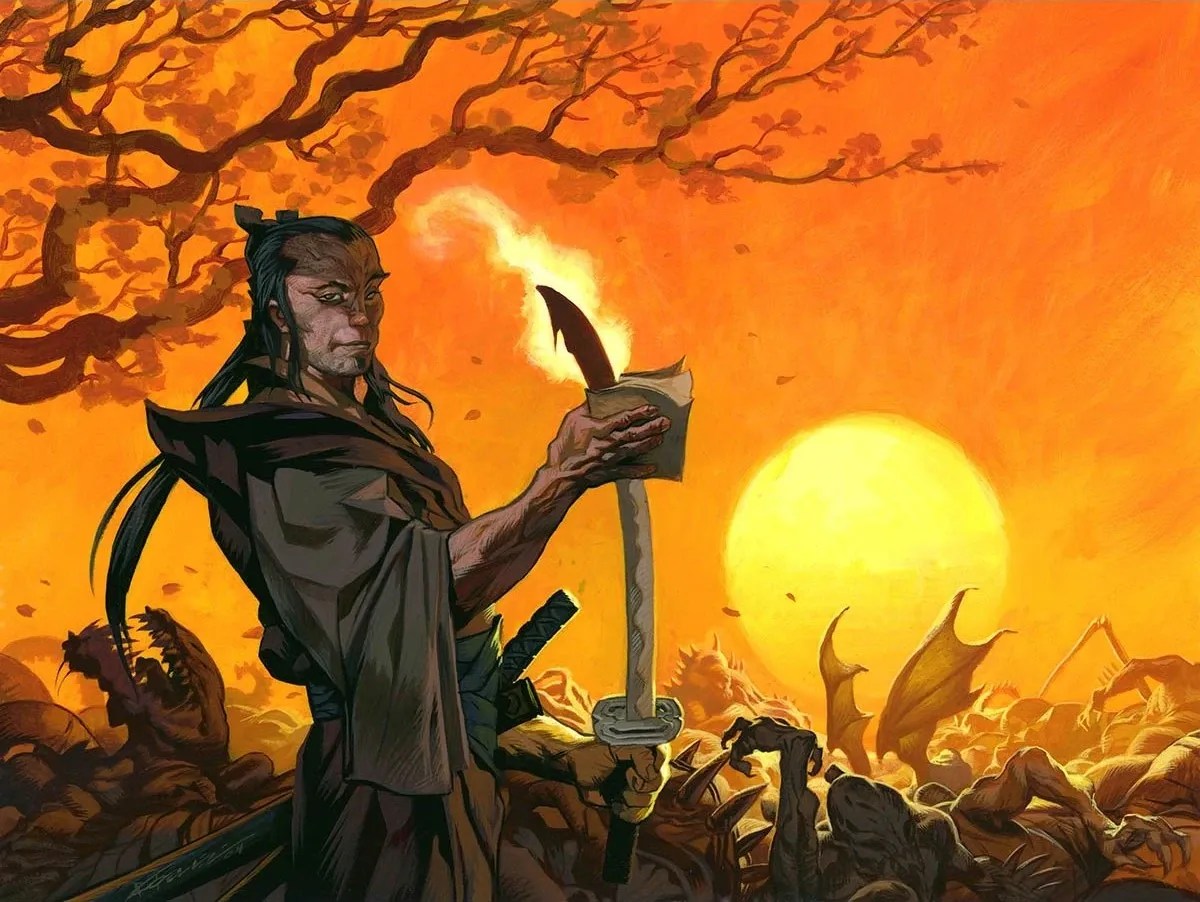
In Twilight Sword, you play as newly awakened Champions with no memories. After a thousand years of peace, the scourge Vardas claimed the titular Twilight Sword and used its primordial power to summon an army of monsters to take over the beautiful, lush lands of Radia. It’s your job to restore “Hope” and free Radia from “Despair,” a dueling mechanic that heavily influences where the party is allowed to go.
That design philosophy permeates everything in Twilight Sword. Instead of a static campaign map, players explore the Realm of Radia through modular cards that slowly reveal new regions, quests, and landmarks in a way meant to echo open-world discovery. At the same time, the rule system is built to be as fast and intuitive as the classic video games it draws from.
Sirignano and co-creator Simone Formicola are particularly proud of the cooking and brewing system they’ve created, yet another important mechanic that evokes Link’s journey through Hyrule.
“Cooking is a huge part of Zelda, but crafting systems in RPGs are usually inaccessible with tons of charts and rules,” said Sirignano. “We made a system where ingredients have effects, and the rules tell you how effects combine. You can cook anything without cross-referencing charts.”
One of the more novel mechanics at play in the game is its approach to dice. In the Realm of Radia, the inverted d12 is king. Twilight Sword’s core system — called Created at Twilight (CAT) — flips traditional tabletop logic on its head. Rolling a 1 is a critical success, while rolling a 12 is a catastrophic failure. Your character sheet sets the target number, not the GM. According to Sirignano, this roll-low system came from experimentation.
“We start by building around mechanics we don’t instantly like — it’s how you create something new,” he said. “You don’t have to ask the GM for difficulty. Everything you need is on your card.”
Say you make an attack roll, and your character’s Strength is 8. All you have to do is roll a d12 and get an 8 or lower to succeed.
Formicola said this simplicity is intended to make the game accessible for those on both sides of the table: “New players and new game masters alike need some sort of structure, something to rely on when playing.”
Those dual priorities — wandering discovery and approachable structure — define Twilight Sword. They also tie back to 2LM’s creative philosophy. The studio has become known for stylish, art-first TTRPGs like Outgunned, Household, and Broken Compass, which have collectively taken home multiple ENNIE Awards for both game design and production value. Twilight Sword aims to translate the language and vibe of video games, not their literal mechanics, into something that works at the table.
For all its emphasis on simplicity and accessibility, Twilight Sword has a surprising amount of complexity in terms of character creation and growth. Among the five races, called Kin, there’s the elflike Huma and muscular, horned Toluna, which feel comparable to Zelda’s Hylians and Gerudo, respectively. But then there are anthropomorphic cats called Kedi, giant penguins called Pengu, and the Strix designed in the spitting image of Vivi from Final Fantasy 9. Each Kin has certain racial Feats but otherwise can come in all shapes and sizes, with no influence on ability scores.
Formicola said they looked at the various environments on the map and thought about what types of Kin could live in them: Kedi live in the desert, Pengu in the snow-capped mountains, and Toluna on the coasts. Each Kin had to share a sort of whimsical vibe.
“One of the first images we had of Twilight Sword was this really buff penguin, the Pengu,” Formicola said.
“People were like, ‘What are you talking about?’” Sirignano said. “But once they saw them, they loved the Pengu.”
Every Champion then chooses to follow up to two Ways (essentially jobs or classes), including Blade, Wild, Light, Magic, Shadows, and Song. The myriad of combinations available here determine the playstyle of the character and make for some pretty cool-sounding classes: Way of the Light Blade? Way of the Shadow Song? Way of the Wild Magic? And as you progress, you can dip into other options.
“You start simple, then as you grow comfortable with the game, you see how many different possibilities you actually have,” Formicola said.
Layered atop this are Radia’s elemental affinities and vulnerabilities, which govern everything from combat to exploration. Fire, Ice, Wind, Earth, Thunder, and Water make up a hexagonal pattern. In the middle, there’s Light and Darkness. (It’s a classic rock-paper-scissors complication.)
“Light and Darkness meet at the Twilight, and Twilight is the union of all eight elements — and the cornerstone of our cosmos,” Sirignano said. “The Twilight Sword is the representation of balance. In our world it’s a sword, but in yours it could be anything: a person, a place, or a spell.”
Parties progress by gathering Hope, gained by helping NPCs, exploring landmarks, and defeating bosses. On the flip side of that is Despair, essentially the intensity of evil corruption preventing the party from moving in certain directions until they level up enough. The ultimate aim of the party is to access the Fortress of Evil, defeat Vargas, and reclaim the Twilight Sword.
In one of the TTRPG’s biggest nods to the newest Zelda classics, “When the night sky is stained with red, the Monsters return to life and haunt the lands of Radia.” Every once in awhile, this atmospheric event revives enemies on the map, so as players are backtracking and exploring to level up their Hope enough, they’ll have to fight enemies — and potentially bosses — again.
Like Breath of the Wild, Twilight Sword believes discovery should feel joyful and focused on helping people to inspire hope, because even the smallest act of kindness can change the world.
Twilight Sword’s Backerkit fundraising campaign runs until Dec. 18 with additional stretch goals planned.
- Security Camera Installation – indoor/outdoor IP CCTV systems & video analytics
- Access Control Installation – key card, fob, biometric & cloud‑based door entry
- Business Security Systems – integrated alarms, surveillance & access control
- Structured Cabling Services – voice, data & fiber infrastructure for new or existing builds
- Video Monitoring Services – 24/7 remote surveillance and analytics monitoring
Author: 360 Technology Group